Engineered wood flooring has become popular among homeowners due to its durability, aesthetic appeal, and stability compared to solid wood. It offers the warmth and beauty of natural wood while being more resistant to moisture and temperature changes. However, the expansion gap is one crucial yet often overlooked aspect of installing engineered wood flooring.
Expansion gaps play a vital role in ensuring the longevity and performance of your flooring. Without them, your floor may suffer from warping, buckling, and structural damage. This guide explores expansion gaps, why they matter, how much space to leave, common mistakes to avoid, and best practices for ensuring a smooth and lasting installation.
What Is an Expansion Gap & Why Is It Necessary?
An expansion gap is a small space left around the perimeter of an engineered wood floor and around fixed objects such as pillars and kitchen islands. This gap allows the flooring to expand and contract naturally with changes in temperature and humidity.
Even though engineered wood is more stable than solid wood, it still reacts to environmental conditions. Without adequate expansion gaps, the flooring planks may press against each other and walls, leading to issues such as:
- Buckling – The flooring lifts and forms peaks due to excessive pressure.
- Warping – Boards twist or curve, distorting the floor’s appearance.
- Gaps Between Planks – Some boards may pull apart in dry conditions if the floor is too constrained.
- Damage to Walls & Fixtures – Without an expansion gap, pressure from the floor can cause cracks in skirting boards and even damage structural elements.
To prevent these problems, ensuring the correct expansion gap is essential.
How Much Expansion Gap Do You Need?
The recommended expansion gap for engineered wood flooring is 10-15 mm (1-1.5 cm) around the room’s edges and any fixed objects. However, this can vary based on several factors:
- Room Size: Larger rooms require additional expansion considerations. If the room exceeds 12 metres in length or 8 metres in width, intermediate expansion gaps may be needed, typically incorporated beneath door thresholds.
- Climate & Humidity: Homes in regions with high humidity fluctuations require slightly more significant expansion gaps to accommodate seasonal changes.
- Underfloor Heating: If underfloor heating is installed, expansion gaps should be on the larger end of the recommended range to allow for thermal movement.
Professional installers often use spacers along the perimeter to ensure a uniform gap during installation.
Common Mistakes to Avoid with Expansion Gaps
Mistakes in leaving expansion gaps can lead to costly repairs or replacements. Here are some of the most common errors and how to avoid them:
- Skipping Expansion Gaps Entirely → Some DIY installers make the mistake of fitting boards tightly against walls. This leads to inevitable buckling as the floor expands.
- Uneven or Inconsistent Gap Sizes → If gaps vary in size, some areas may expand appropriately while others do not, creating an uneven floor.
- Covering Gaps Too Tightly with Moulding → Skirting boards or beading should cover the expansion gap but must not press against the flooring, as this restricts movement.
- Ignoring Humidity Control → If humidity isn’t regulated, wood can expand or contract beyond what was accounted for, causing issues regardless of the initial gap left.
Avoiding these mistakes ensures your flooring remains stable and aesthetically pleasing for years.
Trends in Engineered Wood Flooring & Their Impact on Expansion Gaps
Modern flooring trends have introduced new considerations for expansion gaps:
- Sustainability & Durable Flooring Choices → Many homeowners opt for environmentally friendly flooring materials engineered for stability. While these materials may have lower expansion rates, they require proper expansion gaps.
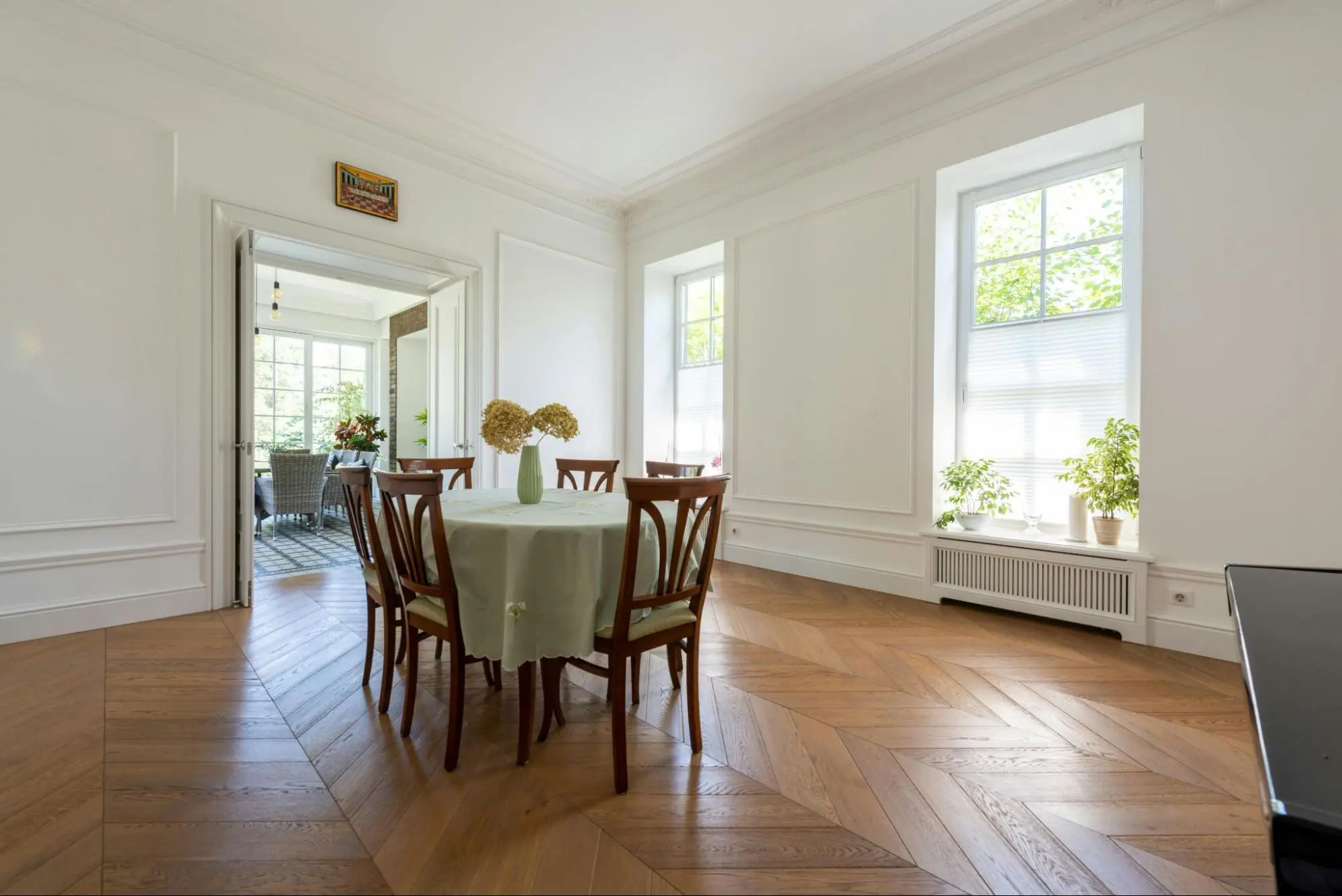
- Patterned Installations (Herringbone, Chevron, etc.) → Complex patterns require additional attention to expansion gaps. If not accounted for correctly, they can result in an uneven or warped appearance over time.
- Wider & Longer Planks → Contemporary designs favour large planks, which are more prone to expansion and contraction, making proper gap calculations even more critical.
Considering these factors when planning your installation will help maintain both the function and style of your flooring.
Best Practices for Ensuring the Right Expansion Gap
To get the expansion gap right, follow these best practices:
- Use Spacers → When laying the floor, use 10-15 mm spacers along the walls and fixed structures to ensure a consistent gap.
- Factor in Seasonal Changes → If installing flooring during a dry season, consider leaving a slightly more significant gap to accommodate future expansion in humid months.
- Choose the Right Skirting Boards or Mouldings → Use skirting or scotia beading to cover the gap while allowing room for movement.
- Consult a Professional for Large Rooms → If your space exceeds standard dimensions, a flooring expert can advise on additional expansion solutions.
- Control Indoor Humidity → Maintain a humidity level between 45-65% to minimise excessive expansion or contraction.
By following these steps, you can ensure your engineered wood flooring remains in top condition for years.
Small Detail, Big Impact
Although expansion gaps may seem minor, they play a critical role in preserving the structural integrity of your engineered wood flooring. Allowing for natural expansion and contraction prevents costly issues such as buckling, warping, and damage to surrounding structures.
To recap:
- Always leave a 10-15 mm expansion gap around the room.
- When planning your installation, factor in room size, climate, and flooring patterns.
- Avoid common mistakes like uneven gaps, covering gaps too tightly, or ignoring humidity control.
- Follow best practices such as using spacers, maintaining consistent humidity, and choosing the right skirting boards.
At The Flooring Masters, we provide high-quality engineered wood flooring and expert advice to ensure a flawless installation.
Browse our collection today and order a free sample to know if the flooring suits you.