Making the right decision for your flooring can be daunting—especially when choosing between finishes like oiled or lacquered. You want your floors to look beautiful, but you also need them to be practical. The wrong choice could leave you with extra maintenance or unexpected repair costs. So, how do you decide?
Your floors are one of the most significant investments in your home, and choosing the wrong finish could turn that investment into a burden. Whether you’re after a polished sheen or a more natural look, understanding the differences between oiled and lacquered finishes will save you time, effort, and money in the long run. By the end of this article, you’ll know exactly which finish suits your home—and your lifestyle.
At first glance, the choice between lacquered and oiled floors may seem straightforward: lacquered for modern, sleek homes, and oiled for rustic charm. But trends in interior design are evolving, and those distinctions are no longer so clear-cut.
Matte lacquer, for instance, is gaining popularity in contemporary spaces, offering a subtler, less reflective finish. On the other hand, oiled floors are being used in minimalist, Scandinavian designs, adding warmth and texture to otherwise simple interiors.
When making your decision, ask yourself: do you prefer a high-gloss finish or a raw, natural feel? Both finishes have the versatility to suit modern or traditional homes, so don’t let preconceived ideas limit your options.

Lacquered floors are known for their durability, forming a protective layer on the surface that guards against scratches and stains. However, that same layer is its downfall when damaged. Think of it as a shield: once it’s scratched, repairing it can be costly and difficult.
Oiled floors, by contrast, offer a different kind of protection. They absorb the oil into the wood, allowing scratches and scuffs to be easily repaired without refinishing the entire floor. It’s like armour—resilient, yet repairable.
For high-traffic areas, homes with children, or spaces where pets roam, oiled floors can handle wear better over time. Use an infographic or chart to visualize how both finishes perform under these conditions, especially when deep scratches occur.
Lacquered floors might seem like the lower-maintenance choice at first glance—after all, they don’t need regular re-oiling. But when they do need repairs or refinishing, it’s often a bigger project. Oiled floors, though requiring more frequent care upfront, offer easier, more affordable touch-ups over time.
For the reader wondering which is the true low-maintenance option, here’s a quick guide:
By considering the long-term effort involved, you’ll see that what’s initially easier may not always be the best choice in the long run.

You’ve likely heard about eco-friendly flooring finishes, but how often do we think about how they impact our health, specifically indoor air quality?
Oiled floors have a natural edge here. Since they don’t create a surface layer like lacquer, they don’t trap dust and dirt, making them better for homes where allergies or asthma are a concern. However, it’s essential to be mindful of the volatile organic compounds (VOCs) that some lacquers release during curing, which can negatively impact air quality.
For those prioritizing health and environmental factors, an oiled finish might be the better choice.
It’s easy to look at the price tag of lacquered and oiled floors and think the decision is clear—lacquered tends to be cheaper upfront. But there’s more to the story.
While oiled floors might require regular maintenance, they’re more affordable to repair. Lacquered floors, once damaged, often need costly refinishing. In the long term, oiled floors could save you money by avoiding expensive full-floor repairs.
| Cost Factor | Lacquered Finish | Oiled Finish |
|---|---|---|
| Initial Installation Cost | £25-£35 per sq.m (average) | £30-£40 per sq.m (average) |
| Annual Maintenance | Minimal (£10-£20 annually for cleaning products) | Moderate (£20-£30 annually for re-oiling supplies) |
| Repair Costs (for minor damage) | £200-£400 (refinishing every 5-7 years) | £50-£100 (spot re-oiling every 2-3 years) |
| Refinishing (for major repairs) | £1,500+ for full floor refinishing | £500+ for full floor re-oiling |
| 10-Year Total Cost (Estimate) | £2,500+ for a 20 sq.m room | £1,800+ for a 20 sq.m room |
Consider two homeowners: one with lacquered floors and one with oiled. Over ten years, the lacquered floor owner spends significantly more on repairs, while the oiled floor owner easily handles minor touch-ups. Think beyond the immediate price tag and consider the total lifecycle cost.

Traditionally, the advice has been simple: use oiled finishes in high-traffic areas like kitchens, and lacquered finishes in bedrooms and living rooms. But this generalization may not hold up for every home.
In fact, hallways—often the most walked-on part of a house—can benefit from oiled finishes, as scratches can be touched up easily. Meanwhile, lacquered finishes can shine in guest rooms or other low-traffic spaces, maintaining their sleek appearance with minimal upkeep.
Tailor your choice to the room type and the foot traffic it will endure. Families with kids or pets might find oiled finishes in main areas more practical, while lacquered finishes can provide an elegant look in lesser-used spaces.
Still unsure? Why not see the finishes for yourself? Request a free sample of both lacquered and oiled finishes to experience the difference firsthand. If you’re still not sure which is right for your home, send us some photos, and we’ll offer expert advice tailored to your space.

Example One: Rectangle Rooms
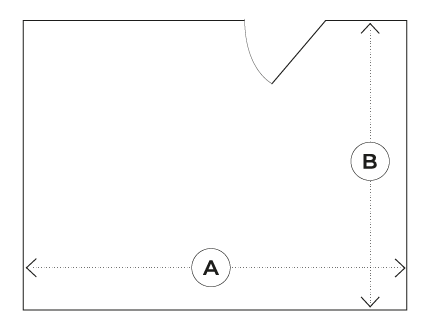
Example Two: Odd Shaped Rooms