Flooring is one of the biggest investments in home design, and choosing the right option can be a challenge. With so many choices available, two of the most popular options are engineered wood and solid hardwood flooring.
But which one is truly the best for your lifestyle, budget, and design needs? This guide will explore the key factors you need to consider when making your decision, including durability, cost, design flexibility, and environmental impact.
Solid hardwood flooring is renowned for its classic appeal and natural beauty. It offers unmatched warmth and timeless elegance, making it a highly sought-after option for many homeowners. The longevity of solid hardwood is another significant advantage: it can be refinished multiple times, allowing it to last for generations with proper care.
Whether you’re drawn to the rich hues of oak, maple, or walnut, solid hardwood provides a variety of options to suit any interior design. This flooring type can stand up to years of use, making it a good long-term investment for homes.

However, solid hardwood has its limitations. It is sensitive to humidity and temperature changes, making it less suitable for moisture-prone areas such as basements or bathrooms. In high-traffic areas, solid hardwood can be prone to scratching, requiring regular maintenance to maintain its appearance.
Additionally, solid hardwood comes with a higher upfront cost compared to engineered wood, both in terms of the material itself and installation.
Solid hardwood is best suited for low-moisture areas like living rooms, dining rooms, and bedrooms. If you live in a climate with stable temperatures and low humidity, solid hardwood is an excellent choice that will add long-term value to your home.

Engineered wood flooring provides excellent versatility and practicality. Its multi-layered structure offers greater dimensional stability than solid hardwood, making it more resistant to moisture and temperature fluctuations. This makes engineered wood an ideal choice for spaces like kitchens, bathrooms, and basements, where conditions can vary.
Engineered wood comes in a variety of designs, finishes, and plank dimensions, offering flexibility to suit any style. Additionally, it is easier and quicker to install, often saving both time and money compared to solid hardwood.
On the downside, engineered wood cannot be refinished as many times as solid hardwood. Once the veneer layer wears down, it cannot be re-sanded or restained to restore its appearance. Furthermore, while engineered wood is durable, it typically has a shorter lifespan compared to solid hardwood.
Engineered wood is well-suited for high-moisture areas like kitchens, bathrooms, and basements, as well as any spaces with variable temperatures. It’s also an excellent choice for homeowners looking for quick and cost-effective installation options.
To know more about engineered wood flooring, you can refer to our blog about the flooring, explaining all about it in detail for better clarity.

| Feature | Solid Hardwood | Engineered Wood |
|---|---|---|
| Durability | Can be refinished multiple times, very durable | Less durable, can’t be refinished after wear |
| Moisture Resistance | Prone to moisture and temperature changes | Highly resistant to moisture and temperature shifts |
| Cost | Higher upfront cost, expensive installation | More affordable with easier installation |
| Aesthetic Appeal | Timeless, natural beauty | High variety of designs, can mimic hardwood look |
| Maintenance | Requires regular upkeep and refinishing | Lower maintenance, but not refinishable |
When it comes to initial costs, solid hardwood is the more expensive option. The material itself tends to be pricier, and the installation can require more time and expertise, further increasing the overall expense. Engineered wood, on the other hand, is typically less expensive to purchase and install.

While solid hardwood may have a higher upfront cost, it can be more cost-effective in the long run due to its ability to be refinished multiple times. Engineered wood, although cheaper to install, has a shorter lifespan and cannot be refinished, potentially leading to higher replacement costs down the line.
| Cost Factor | Solid Hardwood | Engineered Wood |
|---|---|---|
| Material Costs (per sq.m) | £40 - £70 | £20 - £40 |
| Installation Costs (per sq.m) | £30 - £50 | £15 - £30 |
| Total Initial Costs (per sq.m) | £70 - £120 | £35 - £70 |
| Long-Term Maintenance | Requires refinishing (every 5-10 years) | No refinishing, may need replacement after 10-15 years |
| Replacement Costs (per sq.m) | £70 - £120 (refinish) | £35 - £70 (replacement) |
Solid hardwood fares better in dry, controlled environments, but it can warp or swell if exposed to excessive moisture. Engineered wood, thanks to its layered construction, is far more resistant to moisture, making it the ideal choice for rooms with fluctuating humidity, such as basements and bathrooms.
Both solid and engineered wood perform well in high-traffic areas, though solid hardwood has the advantage of being refinishable. However, engineered wood’s dimensional stability makes it a great option for areas where temperature and moisture can vary, providing consistent performance over time.

Solid hardwood flooring offers natural grain patterns and a rich, warm look that adds value and character to any space. Traditional woods like oak, walnut, and maple remain popular for their timeless appeal.
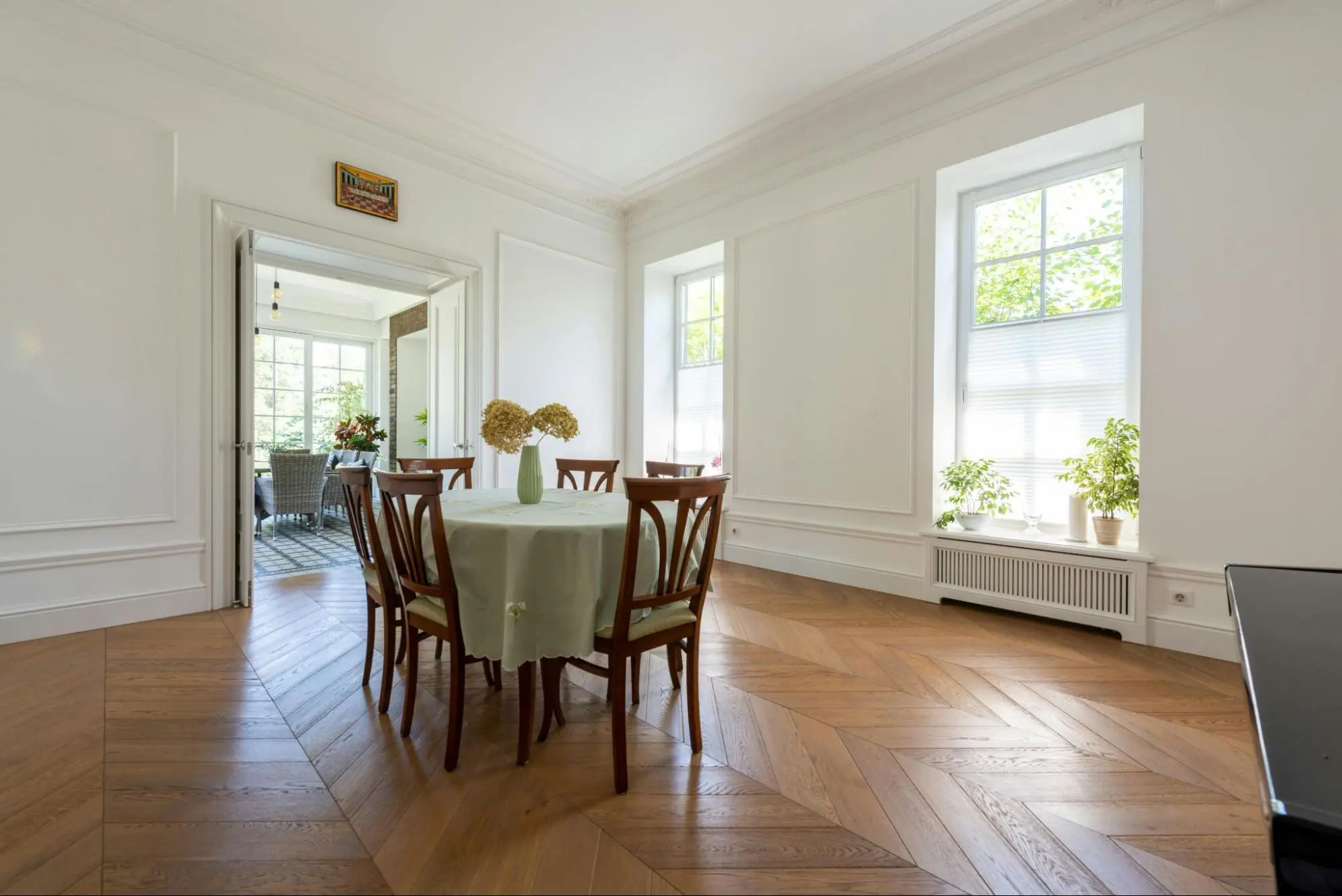
Engineered wood offers a broader range of design options, including wide planks, herringbone patterns, and finishes that can mimic the look of solid hardwood. This flexibility makes it ideal for achieving a high-end aesthetic at a lower cost.
When sourced responsibly, solid hardwood can be a sustainable option. Look for certifications such as FSC (Forest Stewardship Council) to ensure that the wood comes from managed forests where sustainability is a priority.
Engineered wood is often considered a more eco-friendly option because it uses less hardwood and can be made from recycled materials. It’s a great choice for homeowners looking to reduce their environmental footprint.
When choosing between engineered wood and solid hardwood flooring, the decision largely depends on your lifestyle, budget, and specific needs. Solid hardwood is a great choice if you’re looking for long-term durability, refinishing potential, and classic appeal. On the other hand, engineered wood offers versatility, moisture resistance, and easier installation, making it a practical solution for more variable environments.
At The Flooring Masters, we offer high-quality engineered wood flooring and solid hardwood flooring options to suit every home.
Reach out to us and order a free sample today to find the perfect flooring solution for your space!

Example One: Rectangle Rooms
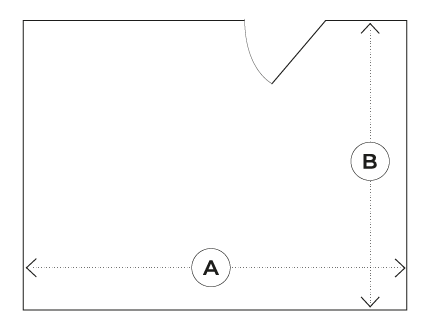
Example Two: Odd Shaped Rooms